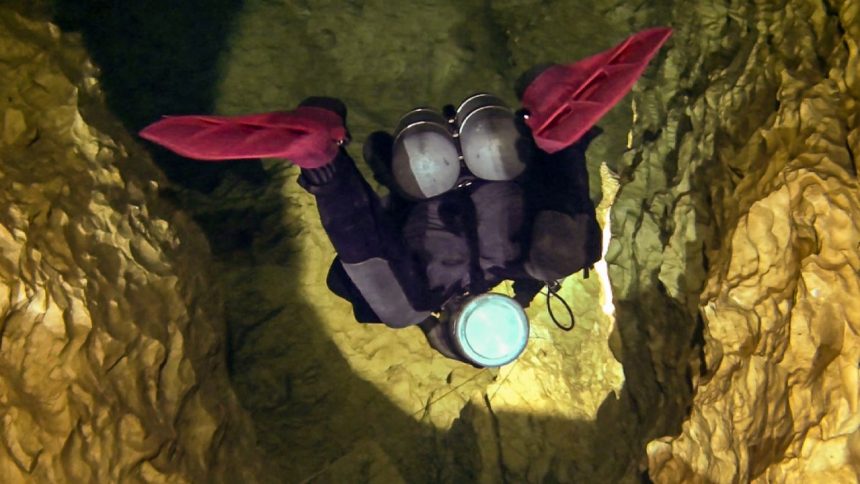
Italy offers a wide range of underwater environments along its mainland and islands, combining coastal wreck diving and highly structured limestone cave systems.
One of the most important regions for technical diving is Sardinia, particularly around Cala Gonone, where extensive cave systems are accessible from the sea.
Alongside cave diving, the Italian mainland also offers wreck diving environments, including sites along the Ligurian coast near Genoa. These environments are strongly influenced by sea state, wind, and swell conditions, which directly determine accessibility and diving feasibility.
Sardinia – Cave Diving Region
Sardinia is one of the most important cave diving regions in the Mediterranean. Around Cala Gonone, numerous cave systems are accessible only by boat, often requiring precise logistical planning and coordination with local dive operators such as Base 1 Sardinia. Boat access depends heavily on sea conditions, especially swell and wind, which can significantly affect entry safety and timing. Inside the caves, visibility is generally good, although entrance zones may show reduced clarity due to mixing between seawater and sediment.
These systems are defined by:
- coastal limestone formations
- submerged cave entrances
- halocline zones between salt and freshwater
- large underground chambers and tunnel systems
Bel Torrente Cave (Sardinia)
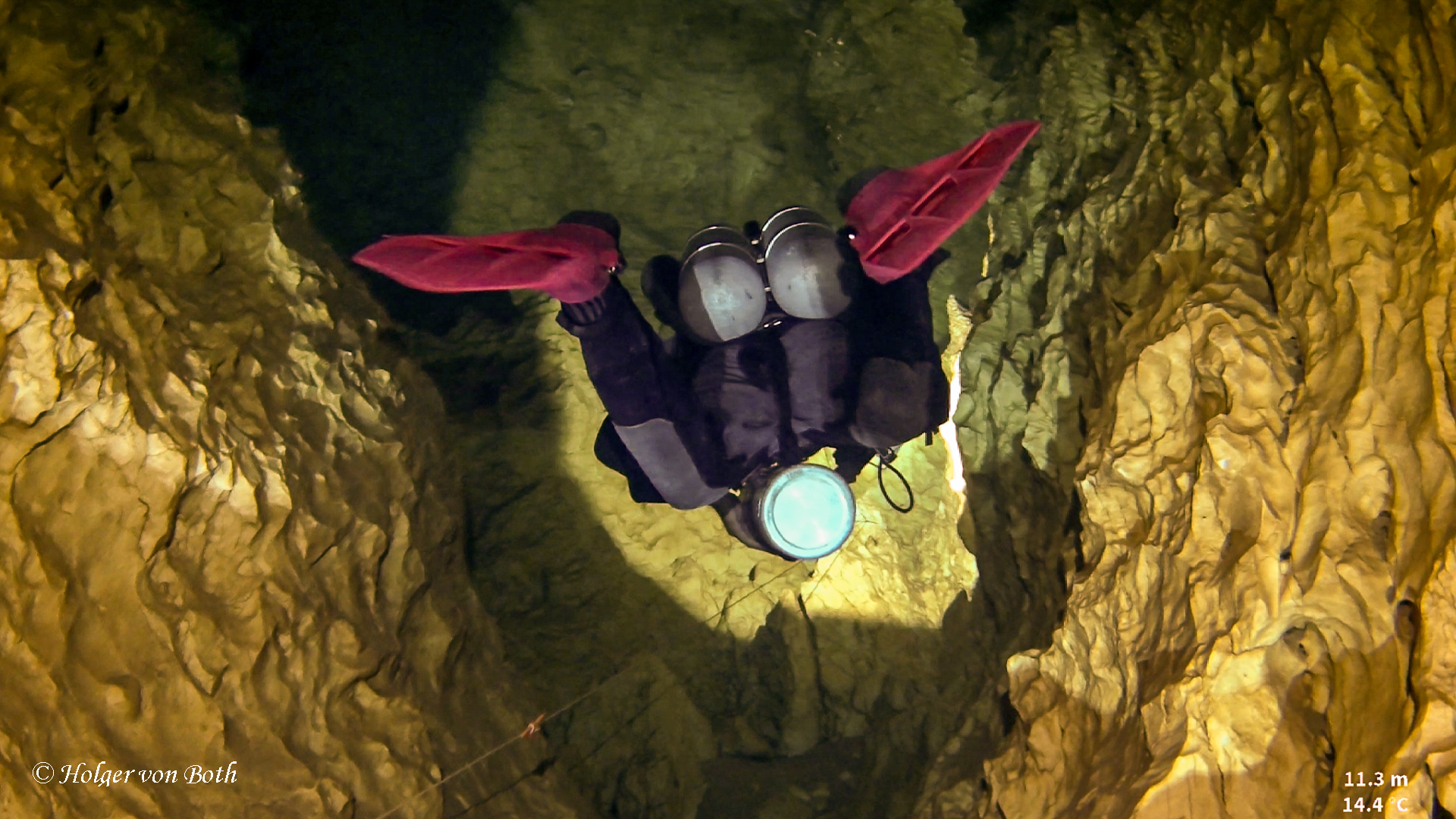
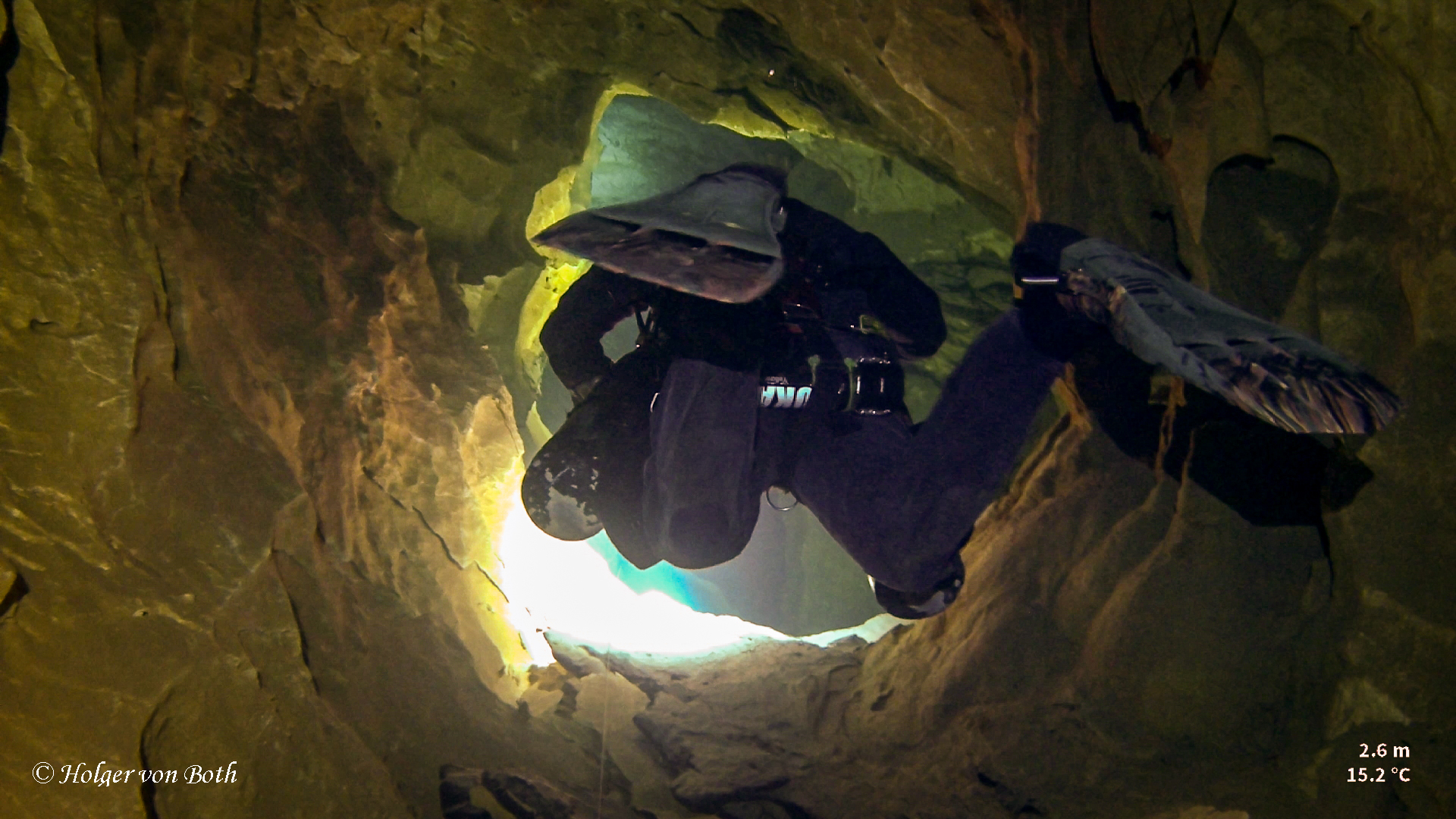
Bel Torrente is a boat-accessible cave system located along the Sardinian coastline. The entrance is marked by large rock formations lying directly in front of the cave opening. After passing these formations, the cave entrance appears with a diameter of approximately 4 meters. The entry zone is often influenced by marine life, including oysters and small mussels attached to the rock surface. In the initial section, visibility can be reduced, and sea grass grows along the bottom, combined with eroded limestone structures that define the entry environment.
Halocline and transition zone
Shortly after entry, freshwater begins to flow out of the cave. This creates a distinct halocline layer, forming a visible optical boundary between salt and freshwater. Beyond this transition zone, visibility increases significantly and the freshwater section becomes crystal clear. From here, the main cave system begins to open.
Main cave system
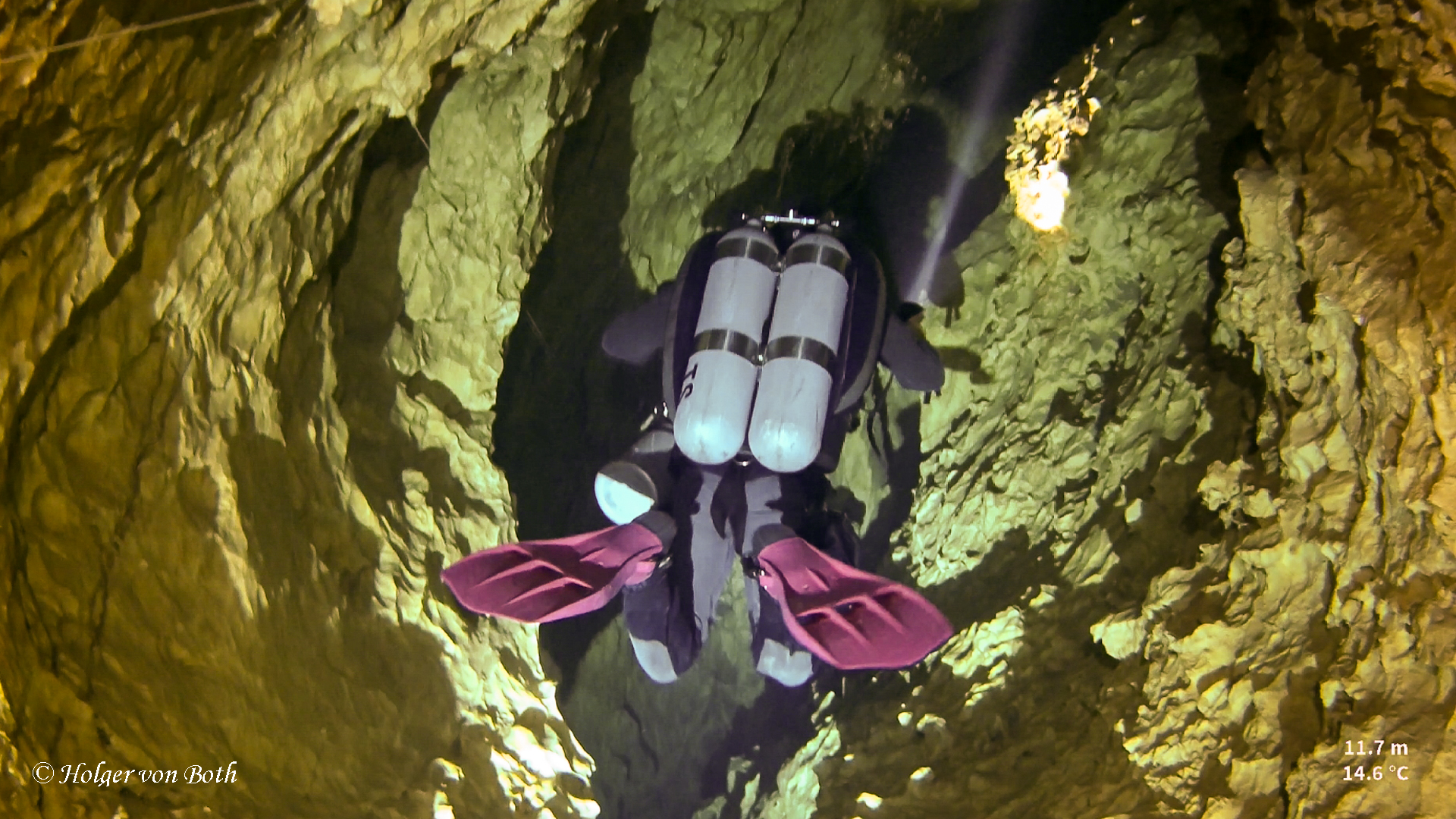
Inside the freshwater section, large chambers and halls become visible under artificial light.
The system includes:
- large underground rooms
- complex limestone formations
- stalactites and erosion structures
- clear geological evolution patterns
Bel Torrente combines marine entry conditions with inland-style cave formations, creating a highly diverse diving environment.
Del Fico Cave System (Sardinia)
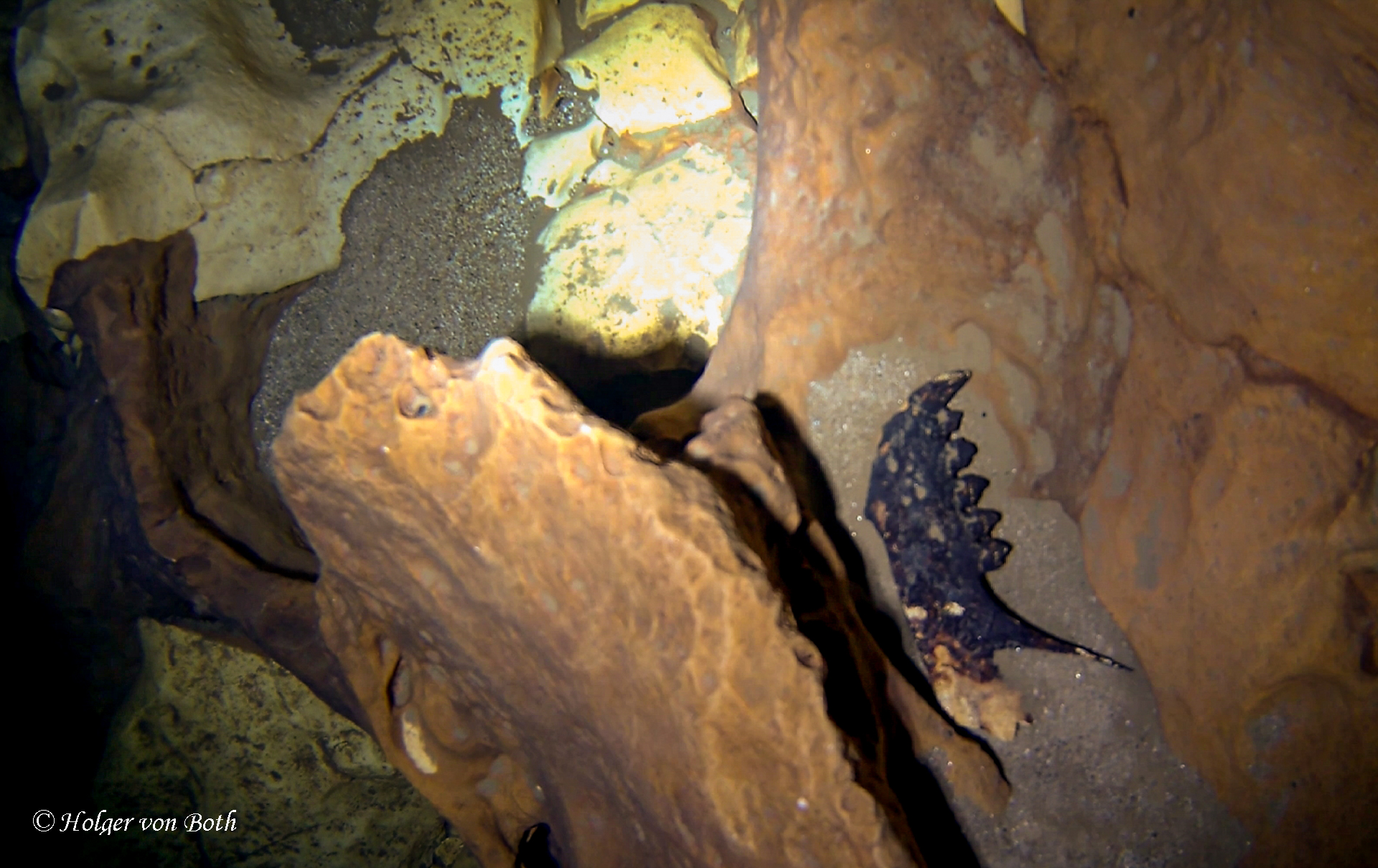
The Del Fico cave system also requires boat access and is located along the Sardinian coastline. The entrance begins with a short swim over a white sandy bottom before entering a large dry cave chamber. From this point, a primary reel is required to connect to the main guideline system before entering the deeper cave sections. The second part of the system becomes progressively narrower and more structured, with highly complex passage geometry.
The system features:
- large entry chambers
- dry cave sections
- narrow underwater passages
- strong contrast between open and confined environments
Del Fico is one of the most visually distinctive cave systems in Sardinia.

Wreck Diving – Heaven Wreck (Genoa)
In addition to cave systems, Italy also offers structured wreck diving environments along its mainland coastline. One of these sites is the Heaven wreck near Genoa on the Ligurian coast. The wreck lies in Mediterranean waters where conditions vary depending on weather, swell, and seasonal currents. These environmental factors directly influence visibility and access conditions. The wreck provides a structured artificial underwater environment, contrasting with the natural limestone cave systems of Sardinia.
Diving at the site requires careful planning due to changing sea conditions. The Heaven wreck represents a different dimension of diving in Italy, focused on maritime structures, technical conditions, and open-water exploration.
Diving experience in Italy
Italy offers a wide range of underwater environments, from cave systems in karst regions to deep wrecks and volcanic underwater landscapes. These environments combine geological diversity with complex diving conditions.
The country is known for varied underwater topography and a strong mix of recreational and technical diving opportunities.
Italy is characterized by:
- cave systems
- wreck diving environments
- karst geology
- variable visibility
- depth diversity
Plan your diving experience in Italy
Diving in Italy ranges from accessible recreational sites to highly technical cave and deep diving environments. Proper certification, local knowledge and conservative planning are essential depending on the region.
Other Underwater Environments
If you are interested in exploring more underwater environments, you can also view galleries from:
Madagascar, Hungary, France, Mexico, Switzerland, and Germany.